
Micropiling
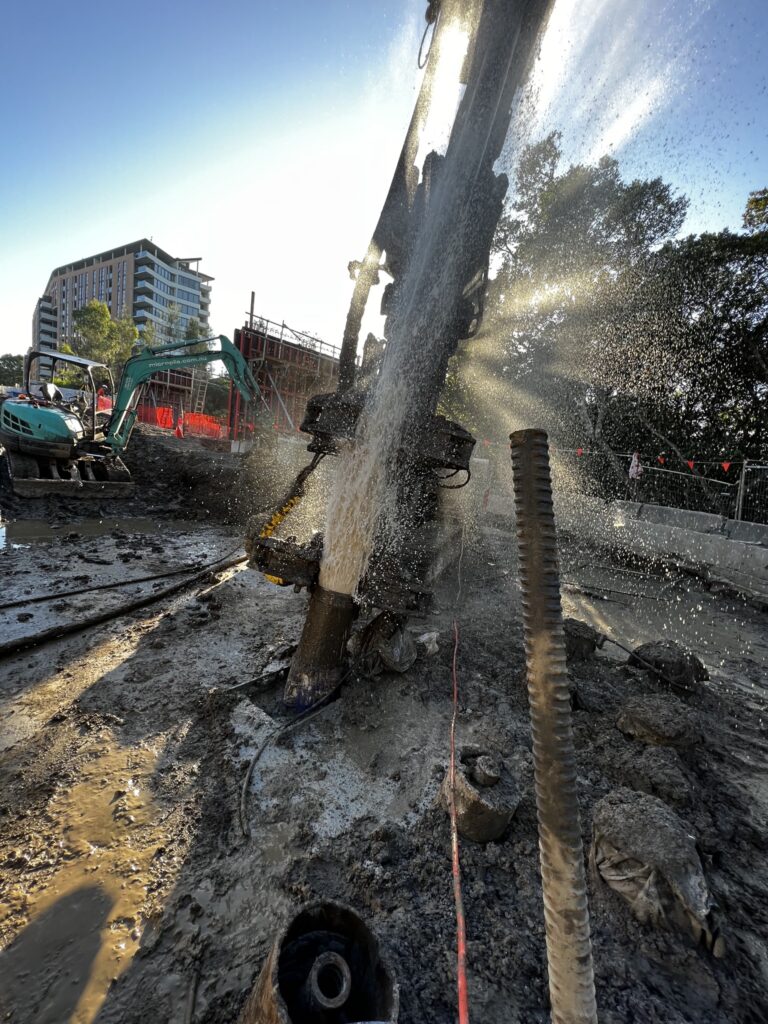
Micropiles are small-diameter (50mm to 300mm) drilled and grouted piles designed with central steel reinforcement to handle both compression and tension loads. Ideal for locations with limited access, restricted headroom, or where minimal impact is needed on surrounding structures, micropiles offer an exceptional foundation solution.
Versatile Applications
Micropiles are highly adaptable, ideal for:
- Limited access or confined spaces
- Environmentally sensitive sites
- Structural settlement mitigation
- Uplift and dynamic load resistance
- Underpinning and foundation upgrades
- Emergency repairs & seismic retrofitting
- Slope stabilisation and excavation support
Exceptional Capacity and Depth
Micropiles can reach depths exceeding 50 meters with load capacities up to 500 tonnes. Typical capacities range from 10 tonnes (300kN) to 150 tonnes (1500kN) per pile.
The Root System Advantage
Micropiles can be grouped to create a “root system” that enhances load capacity and improves geotechnical conditions. This biomimetic design mimics tree roots to distribute forces and create a monolithic structure with steel and grout, minimising disruption while delivering exceptional performance.
Micropile Technologies
PCA Ground Engineering specialises in two advanced micropile techniques:
- Ideal for challenging soil and rock conditions
- Grout is injected under pressure, bonding soil and reinforcing the pile
- Combines hollow bar, filter cake, and grout for superior strength and corrosion resistance
Cased Micropiles
- Suited for larger loads and complex subsurface conditions
- Can be installed in confined spaces with minimal disruption
- Effective for structural upgrades and slope stabilisation
Unmatched Geotechnical Flexibility
Micropiles are versatile, capable of adapting to various soil and rock profiles with simple adjustments to the drill bit ensuring project timelines stay on track without major design changes.
Value Engineering Approach
PCA Ground Engineering often uses micropiles to replace traditional methods, preserving existing structures and reducing costs in challenging geotechnical conditions.